
What is Topical Authority, and Why Does AI Search Care About It?
What is Topical Authority, and Why Does AI Search Care About It?
Learn what topical authority is, why AI search relies on it, and how content clusters, semantic SEO, and complete topic coverage help AI models trust and cite your content.
Haritha Kadapa

Highlights
Thin coverage reads as untrustworthy: AI models answer sentence by sentence and pull from whoever has already covered that specific angle.
One page per query doesn't work anymore: Since AI models stitch an answer from multiple sources, ranking for one keyword matters far less than covering every related question a buyer might ask.
Clusters give AI more places to cite you: A pillar page and linked supporting pages lets each subtopic get cited independently.
Meaning matters more than exact keywords: AI models connect related concepts even without matching phrasing, so content needs to cover a topic's full vocabulary.
Ownership can't sit with marketing alone: Real topical depth needs product's technical accuracy and sales/support's sense of the actual questions customers ask, not just what marketing already knows.
If AI models cite you on one question but skip you on the next nine, you don't have a content problem. You have a topical authority problem.
This article explains what topical authority means, how to build it, and why it now decides whether AI platforms recommend your brand at all.
What is topical authority?
Topical authority is the depth and consistency of your coverage on a subject, measured across every angle a reader or an AI model might ask about. It is not just one good article, but proof spread across many connected pages that you understand a subject completely.
Search engines and AI models use topical authority to decide whom to trust. A site that answers three related questions about a topic looks thin. A site that answers thirty, in a structured and connected way, looks like a source worth citing. This is the foundation of topical authority SEO: building coverage, not just content.
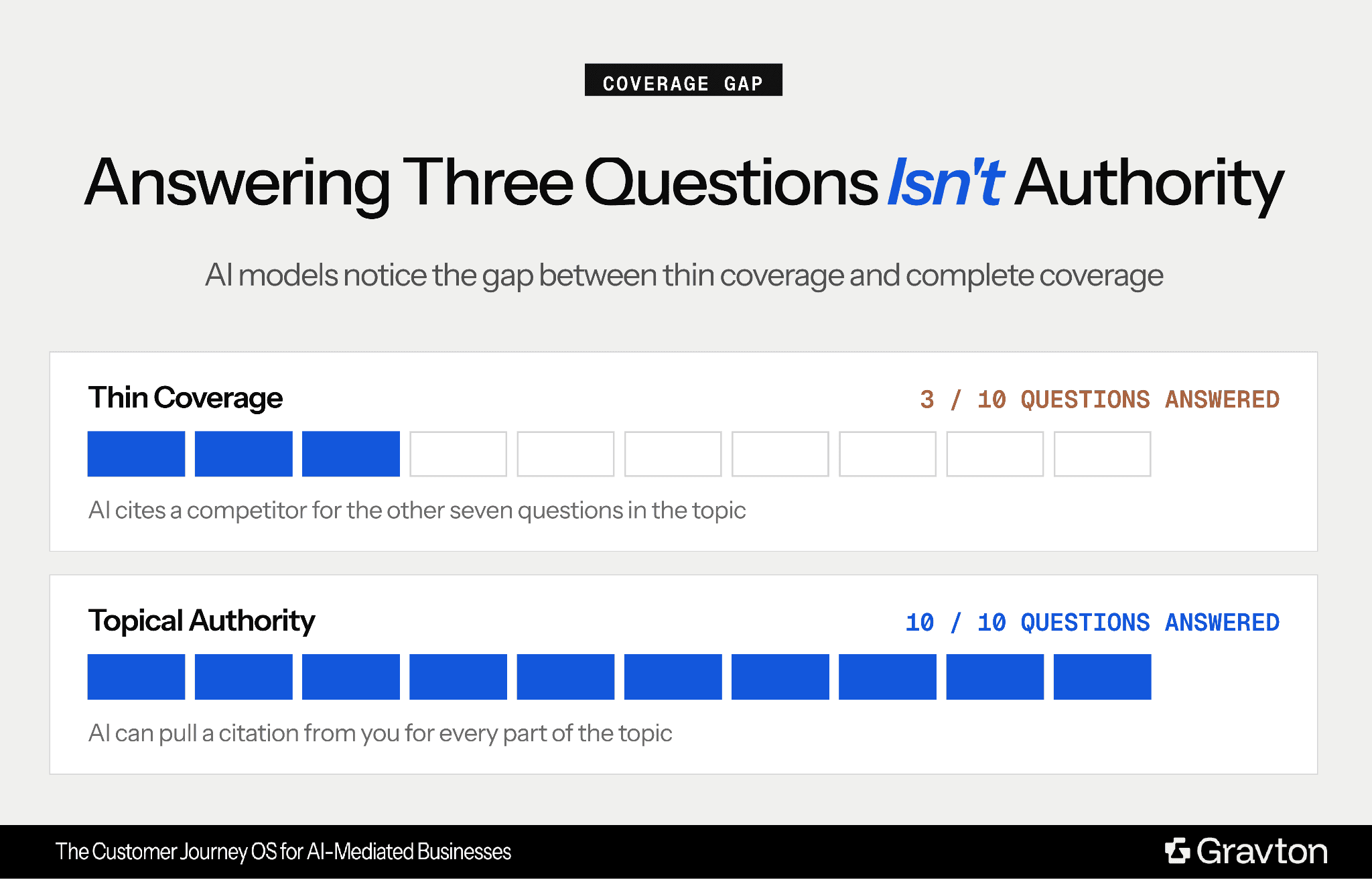
Figure 1: Thin coverage vs. Topical authority.
Why does topical authority matter for AI search?
AI search systems don't rank pages one at a time. They synthesize an answer from several sources and decide, sentence by sentence, which source to trust for which claim. An analysis of AI citation data from Search Engine Land found ChatGPT and Google AI Overviews tend to cite around three to four brands per answer, while Gemini cites roughly eight and Perplexity around thirteen.
A brand with strong topic authority supplies more of those sentences, because it has already published the answer to the follow-up question the model needs.
This is different from traditional SEO. Ranking one page for one keyword doesn't help when an AI model is stitching together an answer from ten sources. Topical authority is the biggest lever inside that GEO system. Brands that cover a topic exhaustively get cited more often, in more places, across more platforms.
Read more on GEO vs SEO: Key Differences, Benefits & What Matters in 2026
Topical relevance also plays a supporting role. Even strong coverage won't help if the content answers a question nobody is asking. Depth and relevance have to move together, or the effort goes to waste.
How do content clusters build topical authority?
Content clusters are the structural unit behind strong topic coverage. A cluster starts with one pillar page covering a broad topic, then branches into a set of supporting pages that each answer a narrower question within that topic. The pillar and the supporting pages link to each other, so both readers and AI crawlers can trace the full scope of what you cover.
This structure does three things at once. It signals depth, since one hub page can't cover thirty subtopics on its own. It signals organization, since internal links show how the subtopics relate. And it gives AI models more entry points into your content, since each supporting page can be cited independently for its specific question.
The stakes here are higher than they look. An analysis of over 548,000 pages retrieved across 15,000 ChatGPT prompts, found that only about 15% of retrieved pages are actually cited and 85% never make it into the final answer. Pages in the top-ranked position were cited roughly 3.5 times more often than pages outside the top 20.
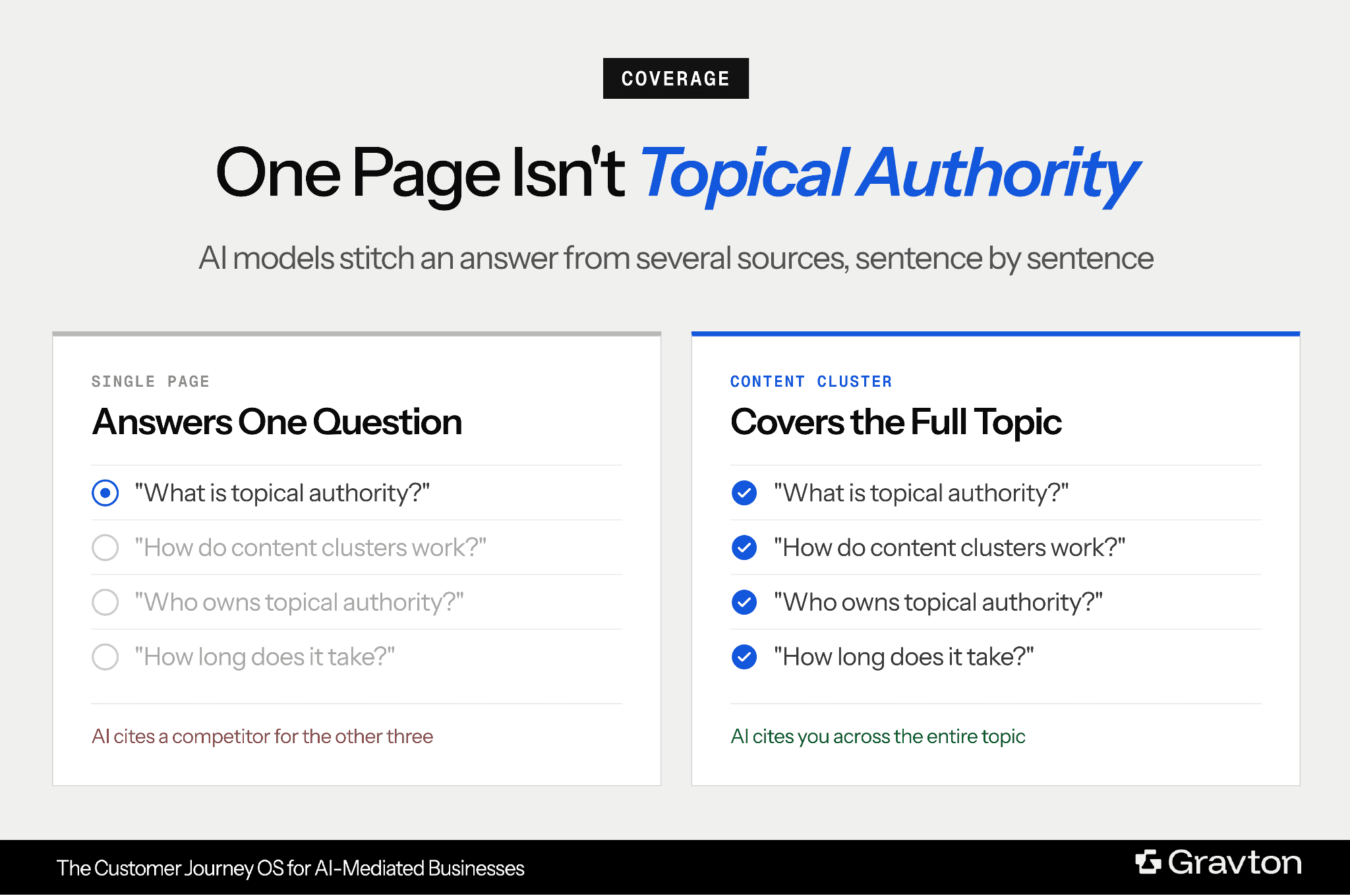
Figure 2: Content clusters build topical authority.
Building a cluster takes discipline. You need a clear map of every question your audience asks about a topic, not just the five that already rank. A gap analysis shows you exactly which questions in a topic you haven't answered yet, which is usually a faster way to find cluster gaps than guessing from a keyword list.
How does semantic SEO support topical authority?
Semantic SEO is the practice of writing content around meaning and intent, not just exact-match keywords. It matters because AI models parse language conceptually. They connect a page about "content clusters" to a query about "topic authority" even if the exact keyword never appears.
This means you build coverage by writing to the full vocabulary of a subject, including related terms, common variations, and the questions a reader actually types.
A page that only repeats one keyword phrase looks narrow to both readers and AI models. But a page that defines terms clearly, answers adjacent questions, and links to related subtopics looks complete.
AI-ready content is written to be understood and cited by language models, not just indexed by search engines. That distinction matters more every quarter, as more discovery happens inside AI answers instead of a list of ten blue links.
Who should own topical authority inside a company?
Building depth coverage spans more departments than most companies assign to it.
For example, the Marketing team writes the content, and the Product team supplies the technical accuracy. In addition, Sales and Support should know the exact language customers use when they ask a question.
Without shared ownership, coverage gets built around what marketing already knows, which leaves real customer questions unanswered.
A simple fix is a single owner who pulls input from all three groups and turns it into a structured plan. That person tracks which subtopics are covered, which are missing, and which need updating.
When should you start building topical authority?
Building topical authority takes months, not a single publishing sprint. It depends on sustained volume and consistency over time. Waiting until a competitor already owns a topic makes it worse because you're no longer filling gaps, you're trying to out-cover a brand with a head start.
A simple starting signal: if your site answers fewer than half the sub-questions a buyer asks about a topic, pull the list from a gap analysis. That topic is your next cluster.
Where does topical relevance fit into GEO?
Generative Engine Optimization, or GEO, is the practice of optimizing content so AI models retrieve and cite it correctly. Topical authority is one of its central inputs. It pays off when paired with topical relevance, making sure the topics you cover are the ones your buyers are actually asking about.
This is one piece of a larger framework. See the full four-step AI search visibility strategy for how topical authority fits alongside SEO, GEO, and AEO.
|
The takeaway
Topical authority is no longer just an SEO strategy. It has become a trust signal for AI search. AI models don't look for the page with the highest ranking. They look for the source that answers a topic completely. Every missing question is another reason for an AI model to cite someone else instead.
Building topical authority means publishing connected content, covering the full range of customer questions, and keeping coverage up to date.
Brands that start early will be in a much stronger position as more people search through AI instead of traditional search engines.
FAQs on topical authority
What is topical authority in AI search?
Topical authority is the depth and consistency of your coverage on a subject. It is the explanation spread across many connected pages, not just one good article.
How is this different from traditional SEO?
Traditional SEO ranks one page for one keyword. But AI search synthesizes an answer from multiple sources, so exhaustive topic coverage matters more than any single ranking.
What's the fastest way to find gaps in my coverage?
Run a gap analysis against the full range of questions your audience asks. It surfaces missing subtopics faster than guessing from a keyword list.
Who should be responsible for building topical authority?
No single team should own it alone. Marketing writes the content, Product supplies technical accuracy, and Sales/Support know the language customers actually use.
How long does it take to build topical authority?
It takes months, not a single sprint. It depends on sustained volume and consistency, and starting early avoids the harder task of out-covering a competitor with a head start.
Win your AI search demand universe
Understand which subtopics in your space AI platforms cite you for, and which ones go to a competitor because you never covered them.
VISIBILITY & CONTENT STRATEGY