
B2B SaaS: Invisible to AI Search on 68% of Buyer Queries
B2B SaaS: Invisible to AI Search on 68% of Buyer Queries
A mid-market B2B SaaS with 400+ blog posts and strong Google rankings was missing from 68% of AI buyer queries. Here’s what Gravton uncovered and the impact.
Haritha Kadapa

|
What triggered the analysis
A mid-market B2B SaaS platform in the business messaging category had 400+ published blog posts, solid Google rankings, and stable organic traffic.
Their VP of Growth used ChatGPT to find the best business messaging tools for mid-market teams. A lighter-weight competitor appeared first. Their platform did not appear at all. That query runs approximately 4,250 times a month among real buyers.
A second problem surfaced in the same 30-day window. The company's AI agent product, a cross-channel automation tool with measurable deflection rates, did not appear in any AI search results when buyers asked about AI-powered customer support tools. That cluster generates over 2,100 buyer searches per month in the US alone.
Neither issue showed up in Google Search Console, because the AI engine citation and Google ranking are two different systems.
What Gravton found
Gravton ran an AI Visibility Snapshot across 200 buyer prompts in two markets: US/UK/EU (100 prompts, 50,000 estimated monthly buyer queries) and the APAC/India (100 prompts, 35,000 estimated monthly buyer queries).
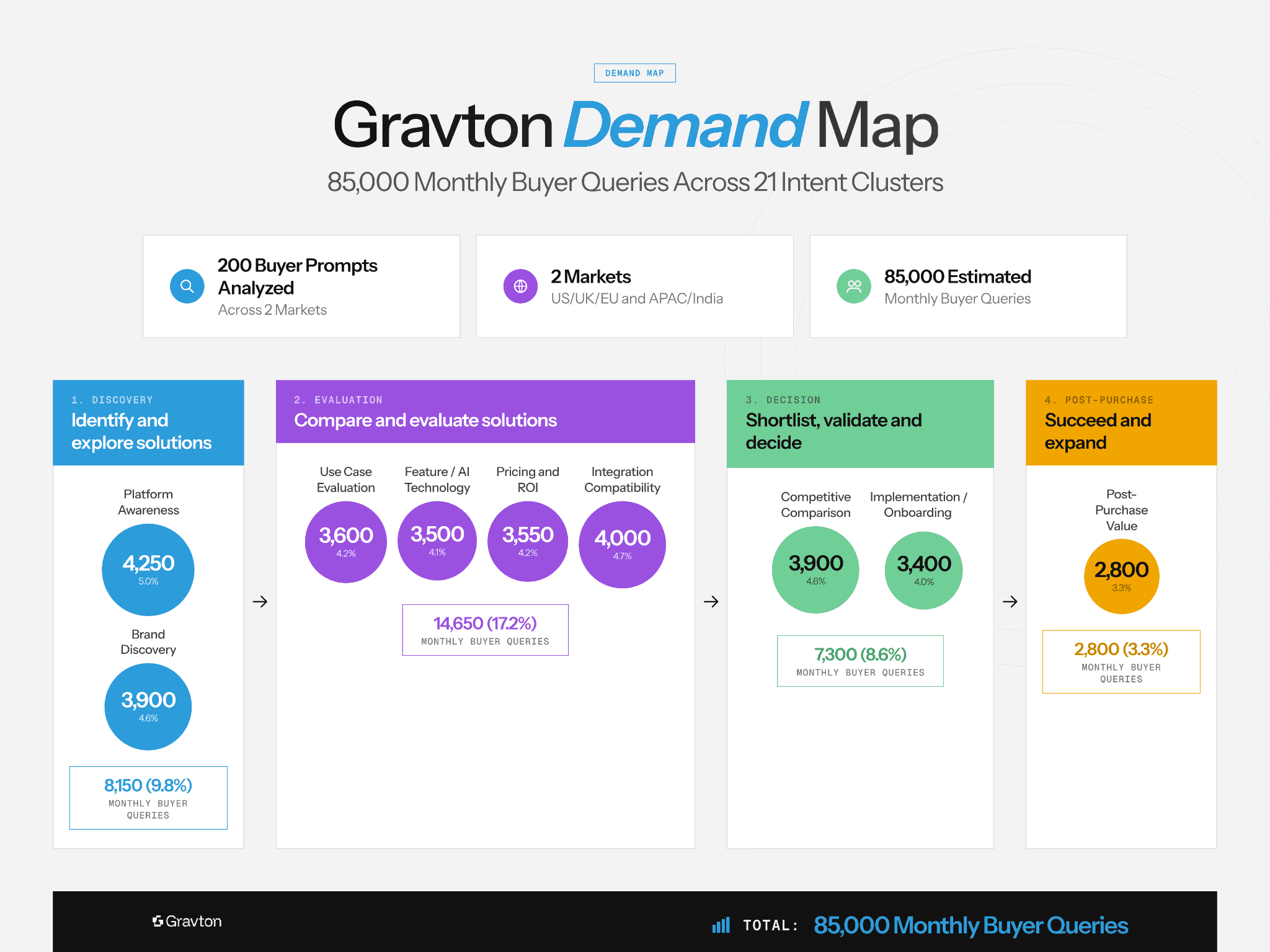
Figure 1: Gravton demand map: breakdown of buyer journey stages.
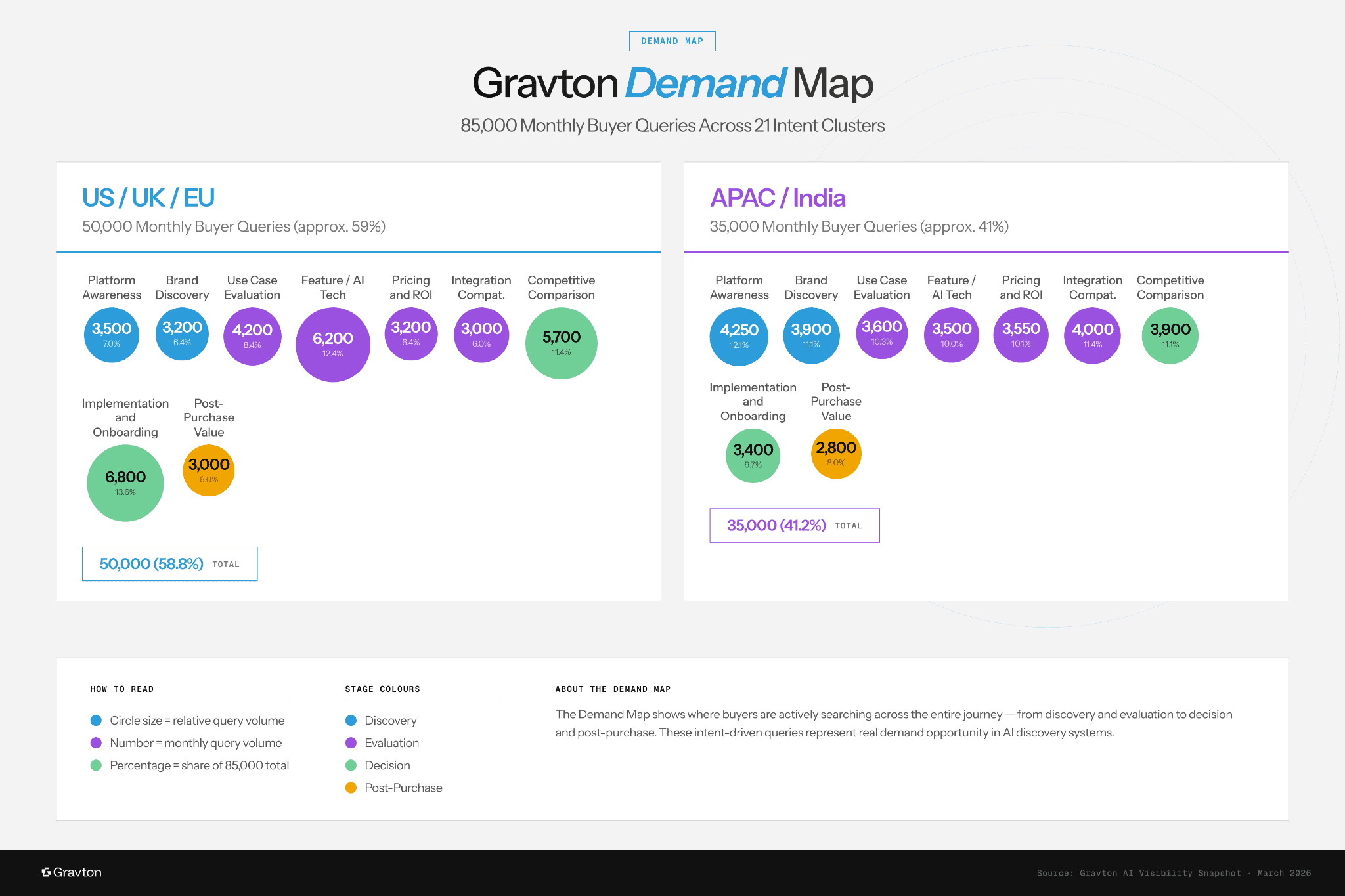
Figure 2: Gravton demand map: regional query distribution.
US/UK/EU
The US problem is the larger of the two regions.
The top three clusters by volume are Implementation and Best Practices (6,800/month), Platform Features and Technology (6,200/month), and Sales Conversion and Pipeline Acceleration (5,700/month). The company's citation rate across all three sits at 15-20%.
The US market carries 47% more monthly buyer prompt volume than India. The company's citation rate in the US is lower than in India on almost every cluster.
Competitor matrix: AI visibility by intent
Gravton compared citation share across the most commercially relevant buyer-intent clusters in the US/UK/EU market. The analysis showed that the company consistently trails competitors on implementation, AI feature discovery, sales conversion workflows, and pricing visibility, despite having comparable or stronger product capabilities.
Intent Cluster | This Company | Company A | Company B | Company C |
Implementation/Setup | ~20% | 55% | 45% | 55% |
Platform Features/AI | ~15% | 50% | 60% | 60% |
Sales Conversion | ~15% | 55% | 55% | 40% |
Pricing & ROI | ~20% | 55% | 65% | 60% |
Customer Support/AI | ~20% | 55% | 65% | 60% |
Compliance/Security | 35-40% | 50% | 55% | 40% |
The gap was not product capability. The gap was AI-readable positioning, structured evidence, and instructional content architecture.
APAC/India
Table: APAC/India’s citation rate by intent cluster
Intent Cluster | Monthly Query Volume | Company's AI Citation Rate | Citation Leader | Leading by (%) |
|---|---|---|---|---|
Platform Awareness | 4,250 | 35-45% | Competitor A | −25 pp |
Integration Compatibility | 4,000 | 25-35% | Competitor B | −30 pp |
Use Case Evaluation | 3,600 | 20-30% | Competitor B | −40 pp |
Pricing and ROI | 3,550 | 30-35% | Competitor C | −27 pp |
Feature / AI Technology | 3,500 | ~15% | Competitor B | −45 pp |
Implementation and Onboarding | 3,400 | 25-35% | Competitor A | −30 pp |
2,800 | 20-30% | Competitor B | −30 pp | |
Brand Discovery | 3,900 | 70-80% | This company leads | - - - |
Source: Gravton Labs AI Visibility Snapshot, Bayesian Fusion model (SV + ASV), March 2026. Citation rates measured across ChatGPT, Gemini, and Perplexity.
Across 35,000 monthly buyer queries in India, the company is absent or underrepresented on approximately 24,000 of them. They lead only on brand queries where the buyer already knows their name.
What was causing the gap
The problem is that LLMs couldn’t read, trust, or recommend based on their content.
Gravton identified four structural failure points overall
No schema on existing content
Every blog post lacked the SoftwareApplication, Product, and FAQ JSON-LD schema. A competitor with significantly fewer articles but a structured schema was being cited in their place. The platform awareness gap (25 pp) is entirely attributable to schema encoding, not to content quality.
Pricing not machine-readable
The company's pricing tiers exist but are not structured for AI extraction. Buyers who reach the pricing stage find a competitor's number first.
AI agent product invisible in AI search
The company's AI agent product outperforms the category leader by measurable performance metrics. It had no dedicated content written for AI extraction. The 15% citation rate for the Feature / AI Technology cluster is entirely recoverable. The product capability is real and documented internally but never published in a format AI engines can parse.
Tutorial content missing
The content produced by this company focuses heavily on comparisons but lacks instructional elements. AI systems regard step-by-step instructions as reliable sources of information. Consumers view how-to articles as solutions to their issues. Shortlists are usually created before the comparison phase, and this company was completely missing from it.
The biggest gaps in simple terms (APAC/India)
The company's Google-optimized blog content was built for human readers and traditional search rankings. AI engines work differently. They prioritize machine-readable structured data, instructional depth, pricing clarity, and extractable product information.
The company already had 400+ pieces of relevant content. The issue was that AI systems could not reliably parse or cite them.
One of the largest gaps was the AI product itself. Buyers were actively searching for AI automation capabilities, AI support workflows, and conversational intelligence features. Still, none of the existing content described these capabilities in a format that AI engines could confidently retrieve.
The product existed. The visibility layer did not.
The biggest gaps in simple terms (US/UK/EU)
Every page on the company’s site positioned the platform primarily as a messaging tool, while US and EU buyers were increasingly searching for AI agent workflows, sales acceleration, automated qualification, and conversational support systems.
The company already supported many of these use cases. The problem was that none of the content framed the platform in the language that buyers and AI engines used.
This was not a product gap. It was a content architecture gap.
The highest-volume queries in the US market focused on AI agent performance, implementation workflows, and measurable business outcomes. Competitors were publishing structured setup guides, benchmark data, and instructional documentation. This company was not.
|
What the fix looks like: Gravton’s priority matrix
Gravton ranked each remediation into Priority Matrix, consisting of: act now, plan next, monitor, invest and build.
ACT NOWHighest impact or fastest visibility recovery
Instead of adding new content, Gravton recommended using the SoftwareApplication, Product, and FAQ JSON schemas for the existing blog posts. This was the highest-priority action in the roadmap. → Estimated citation lift was 15-25 pp for platform awareness and comparison clusters within 60 days.
The company’s pricing information is to be formatted in machine-readable formats so that AI engines can reliably extract and cite it, including pricing in both INR for Indian buyers and USD for US and EU buyers. → This closes a pricing visibility gap that was sending bottom-of-funnel buyers to competitor recommendations instead. | PLAN NEXTHigh impact or Moderate build effort
Queries on ticket deflection rates, lead qualification accuracy, and automated demo scheduling generate more than 2,100 searches per month, yet the company currently holds only a 15% citation share. → Gravton recommended a dedicated content layer built around the specific problems US buyers were already searching for.
Three high-volume evaluation queries (350-520 searches/month each) had no matching instructional content. → Gravton specified the exact prompts, the format AI engines prefer, and the competitor pages currently winning each one. |
MONITORStrong existing visibility areas
The company already performed strongly on direct brand-intent queries where buyers searched for the brand by name. → Gravton recommended maintaining visibility leadership in these clusters through periodic monitoring, schema consistency, and citation tracking rather than aggressive expansion. | INVEST & BUILDLong-term visibility infrastructure
Although the company supported more than 70 integrations, none of them had dedicated AI-citable pages. This is a missed opportunity because each integration category carries its own buyer query demand. → Gravton recommended adding structured integration pages with the FAQ schema to convert these invisible integrations into AI citation assets.
The company already had internal, measurable operational data, including AI deflection rates, onboarding performance, and automation outcomes. → Gravton recommended selectively publishing benchmark and performance data to strengthen AI trust signals and increase citation authority across enterprise evaluation queries. |
The outcome
6,400 buyer queries a month were going to competitors, not because this company's product was weaker, but because its content was formatted for Google and not for the systems buyers were actually using.
The most important outcome: three of the five highest-impact remediation opportunities required no new content creation.
The visibility gap was largely structural: missing schema, non-machine-readable pricing, undocumented integrations, missing AI-citable formatting
In other words, much of the lost visibility could be recovered without rebuilding the content engine from scratch.
Visibility uplift potential
The visibility gap is also a measurable opportunity for uplift.
Several of the highest-volume buyer-intent clusters remain structurally under-contested from an AI visibility standpoint. In multiple categories, competitors are leading simply because their content is machine-readable, instructional, and AI-citable, not because their products are stronger.
That creates an unusually high leverage opportunity for brands that fix discoverability infrastructure early.
Opportunity Area | Current State | Potential Uplift within 6 months |
Platform Awareness | Citation rates trail leaders by 10-25 pp | +15-25 pp citation lift through schema deployment |
Integration Compatibility | Citation rates trail leaders by up to 30 pp | Recover 10-30 pp through AI-citable integration documentation |
Use Case Evaluation | Citation rates trail leaders by up to 40 pp | Recover 20-40 pp through instructional and evaluation-stage content |
Pricing & ROI | Citation rates trail leaders by 22-27 pp | Recover 15-27 pp through machine-readable pricing and ROI visibility |
Feature / AI Technology | Citation rates trail leaders by up to 45 pp | Recover 20-45 pp across AI feature, automation, and agent-related queries |
Implementation & Onboarding | Citation rates trail leaders by up to 30 pp | Recover 15-30 pp through setup guides, onboarding workflows, and instructional content |
In multiple clusters, the company trails competitors by 20-45 pp in AI citation share. Much of that gap is recoverable through structural improvements rather than large-scale content production.
The fastest gains come from making existing content easier for AI systems to understand, extract, and cite.
|
Win your AI search demand universe
Understand how AI platforms evaluate content for buyer queries and where competitors are getting cited on the prompts your brand is missing.
VISIBILITY & CONTENT STRATEGY