Insights Engine

Insights Engine

Insights Engine

Gravton's Intelligence Layer for
AI Search Visibility
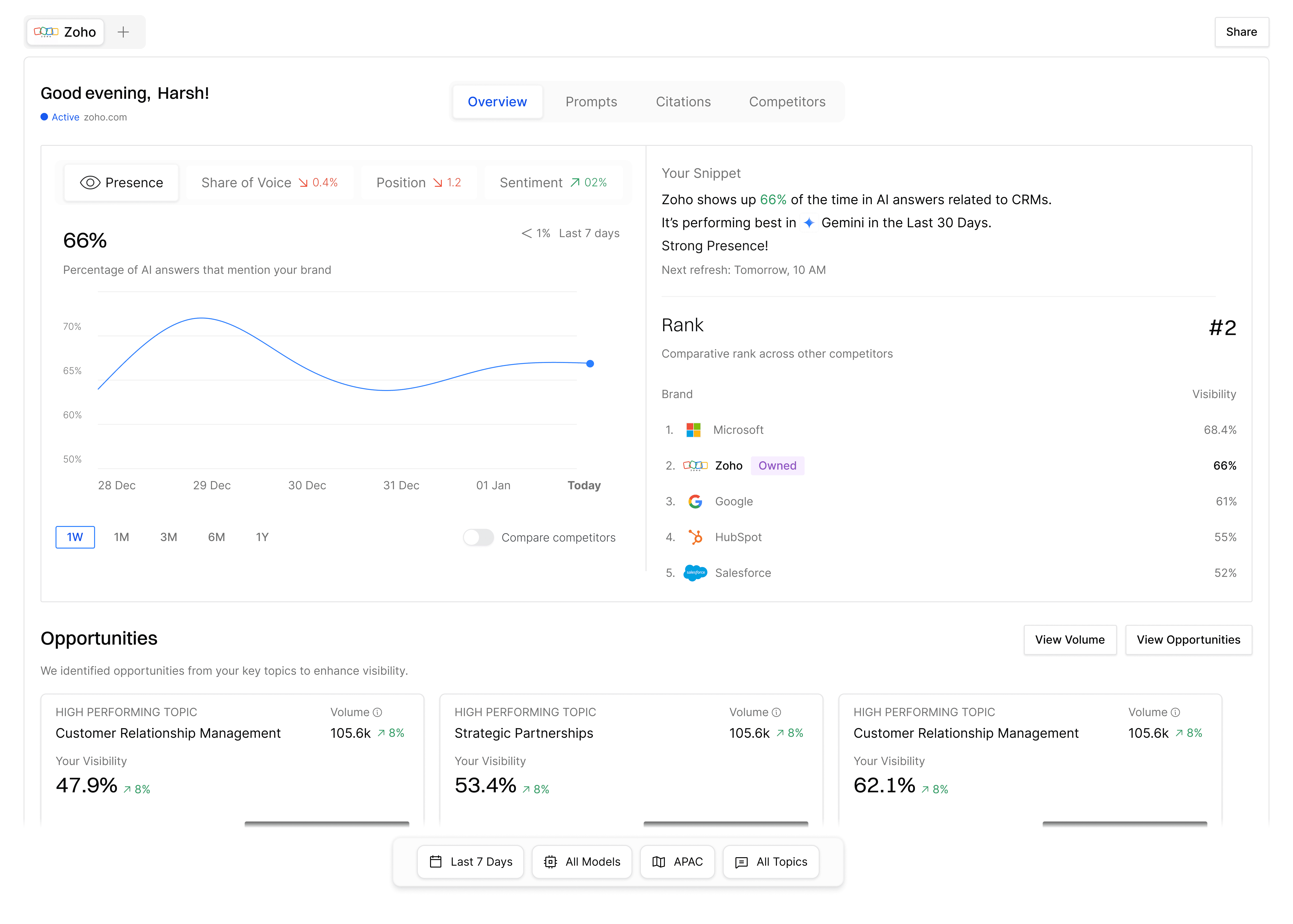
Image of Qarin Dashboard

 Lift in
120 days.

 Lift in
120 days.

15-15%

Visibility Lift across Citations

15-15%

Visibility Lift across Citations

15-15%

Visibility Lift across Citations

10-15%

conversion rate lift from organic search

10-15%

conversion rate lift from organic search

10-15%

conversion rate lift from organic search

10-15+

Hours Saved on Research & Content

10-15+

Hours Saved on Research & Content

10-15+

Hours Saved on Research & Content

15x

faster content workflow

15x

faster content workflow

15x

faster content workflow

THE ENGINE

What the Insights Engine does

Gravton's Insights Engine monitors how AI platforms interpret, retrieve, cite, and position a brand across real buyer prompts. 

It maps the full range of conversational intent, the questions buyers ask, the way those questions evolve across the funnel, and how AI platforms respond to each of them.

Where does the brand appear in AI responses?

Visibility status across platforms and prompt types

Where does the brand appear in AI responses?

Visibility status across platforms and prompt types

Where does the brand appear in AI responses?

Visibility status across platforms and prompt types

Which prompts trigger brand citations?

Conversational patterns that generate brand presence

Which prompts trigger brand citations?

Conversational patterns that generate brand presence

Which prompts trigger brand citations?

Conversational patterns that generate brand presence

Which competitors do AI platforms recommend instead?

Competitive displacement across specific intent clusters

Which competitors do AI platforms recommend instead?

Competitive displacement across specific intent clusters

Which competitors do AI platforms recommend instead?

Competitive displacement across specific intent clusters

How is sentiment and positioning framed?

Whether brand mentions are positive, neutral, or undermining

How is sentiment and positioning framed?

Whether brand mentions are positive, neutral, or undermining

How is sentiment and positioning framed?

Whether brand mentions are positive, neutral, or undermining

What content gaps are causing invisibility?

Structural and topical weaknesses in the brand's AI footprint

What content gaps are causing invisibility?

Structural and topical weaknesses in the brand's AI footprint

What content gaps are causing invisibility?

Structural and topical weaknesses in the brand's AI footprint

Which opportunities carry the highest business impact?

Prioritised actions tied to pipeline and revenue potential

Which opportunities carry the highest business impact?

Prioritised actions tied to pipeline and revenue potential

Which opportunities carry the highest business impact?

Prioritised actions tied to pipeline and revenue potential

The result is a living intelligence map across the AI platforms that gives marketing teams confidence in their competitive position.


DEMAND UNIVERSE

The Demand Universe

0

1

.

Building the Universe to Capture Demand

The Insights Engine begins by constructing a Demand Universe — a structured map of how buyers research, evaluate, compare, and discuss a category online.

It analyses a company’s public digital footprint, including:

  • Product pages

  • Documentation

  • Blog content

  • Positioning language

  • Competitor references

  • Category associations

This helps the system understand:

  • Product lines

  • Market context

  • Buyer personas

  • Existing content focus

0

2

.

Expanding Across Buyer Ecosystems

The system extends beyond owned content into the broader ecosystem where buyers express intent.

Sources include:

  • Reddit

  • Quora

  • YouTube

  • G2

  • Industry publications

  • Regulatory bodies

  • Analyst sources

  • Domain-specific authorities

This creates a broader understanding of real buyer conversations and market narratives.

0

3

.

Organising Buyer Intent into Clusters

Discovery behaviour is organised into intent clusters mapped across the buyer journey.

Example cluster: Portability

  • Informational research

  • Vendor comparisons

  • Migration concerns

  • Switching-risk discussions

  • Pricing and evaluation queries

Each cluster is scored using:

  • Demand signals

  • Commercial relevance signals


This enables prioritisation of conversations most likely to impact pipeline and revenue.

0

4

.

Generating Strategic Prompt Intelligence

The Insights Engine generates two complementary prompt classes:

  • Broad prompts for high-volume category discovery

  • In-depth prompts for nuanced evaluation-stage decision making

This framework measures:

  • Brand presence

  • Competitive positioning

  • Buyer consideration across different journey stages

The result is a more accurate view of how a brand appears during real-world buyer evaluation.

PROMPTS

Prompt-Level Intelligence

The shift from keywords to conversations
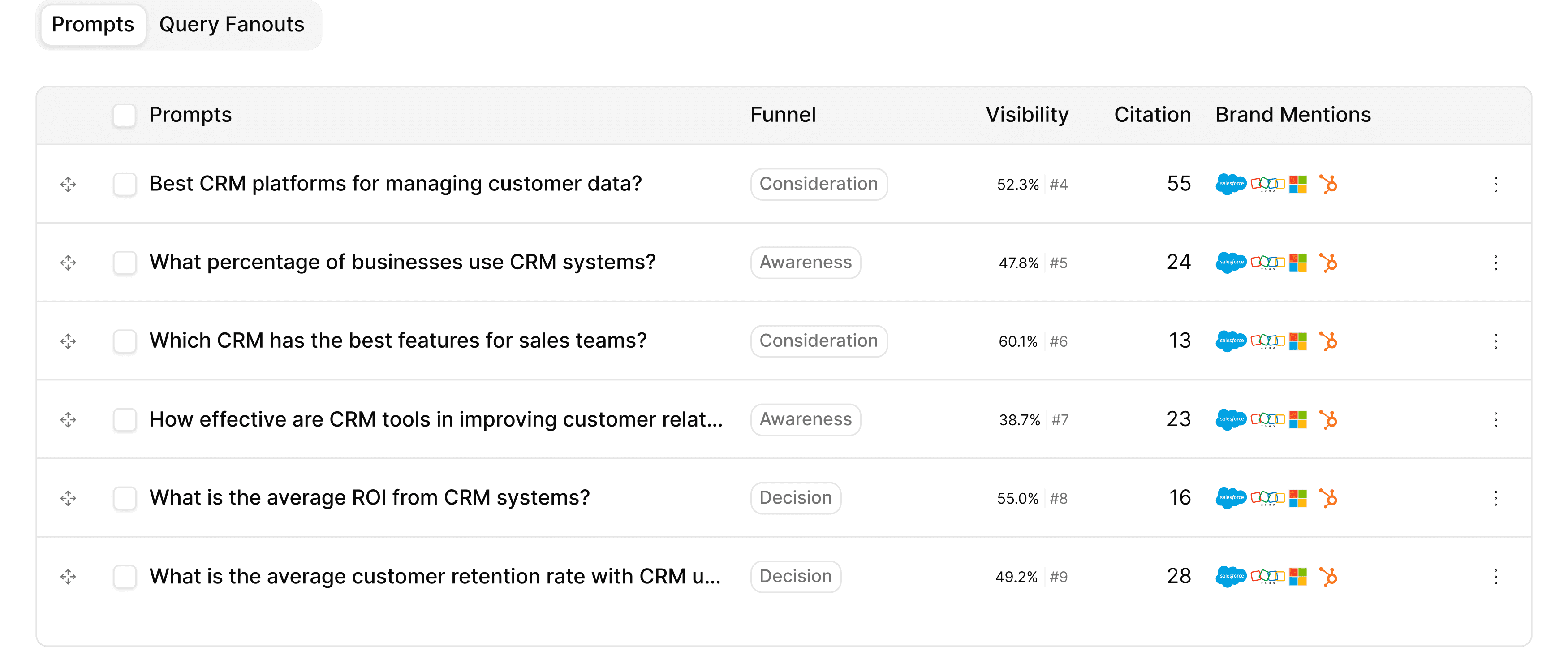
One of the most significant differences between traditional search engine optimization (SEO) and AI discovery is the role of the prompts. In SEO, marketers optimise pages around keyword phrases. In AI-mediated discovery, buyers ask nuanced, multi-step, conversational questions. The difference is specificity and buyer intent.

Consider the kinds of questions buyers now direct at AI platforms: "What is the best CRM for mid-market SaaS teams managing distributed sales?""What are the most credible options for sales intelligence?""How should I measure AI search visibility for a B2B software company?"

These are not keyword queries. They are decision-support questions, and the AI responses to them function as buying guidance.
Our Insights Engine tracks these prompts directly, mapping them across the buyer journey and measuring the brand's performance in each.

For every tracked prompt, our system captures the 

  • Prompt frequency 

  • Brand citation rates

  • Competitive dominance 

  • Sentiment framing and 

  • Positioning patterns

Prompt intelligence empowers marketing teams with a precise, data-backed view of how AI platforms shape buyer perception before a single visit.

THE METRICS

The Three Core Metrics

The Insights Engine analysis is based on three connected performance areas. The Visibility, Sentiments and Position.

Acquisition

Pre-purchase demand. Awareness, evaluation, comparison, decision.

  • Best enterprise devices for hybrid teams

  • Brand vs competitor, which is right for a global rollout?

  • Is brand reliable for enterprise security?

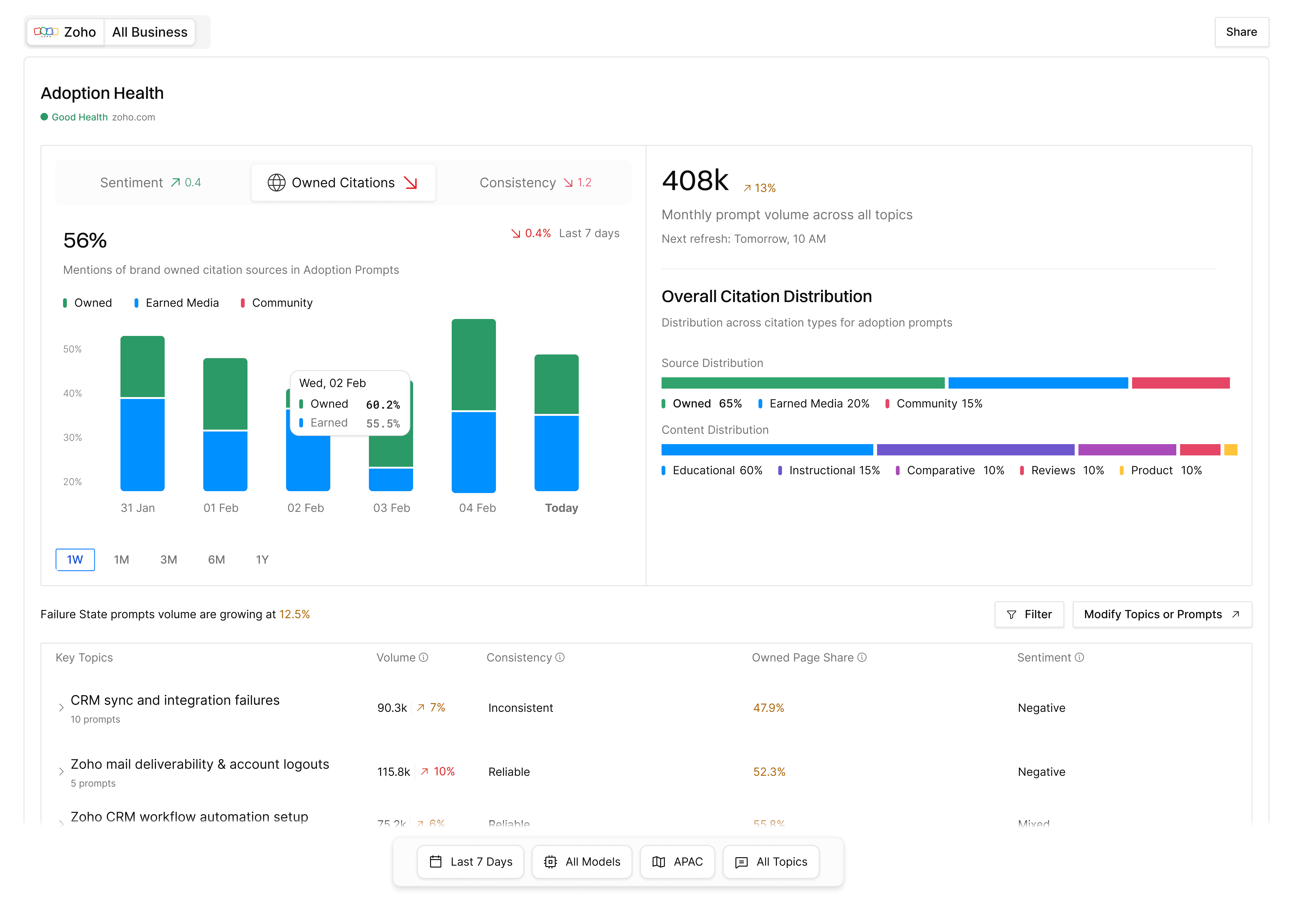
Adoption Health

Post-purchase demand. Setup, support, expansion, renewal.

  • How do I set up a device for a new employee?

  • My device is slow after an update, what should IT check first?

  • Should we renew, upgrade, or evaluate another vendor?

A plane flying through a blue sky filled with fluffy white clouds.
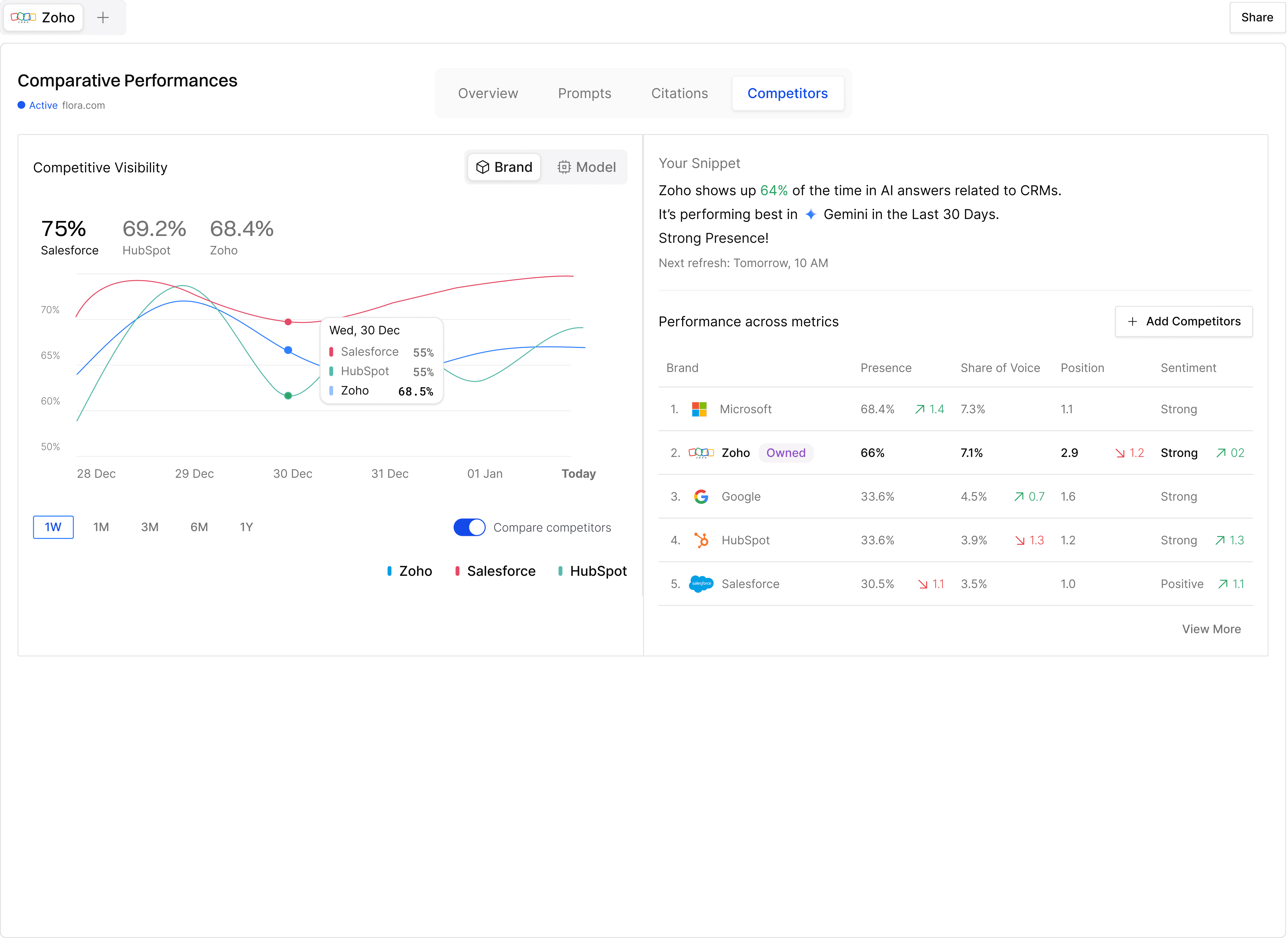
An extensive dashboard layout displaying numerous repeated sections, featuring graphs, charts, and navigation options.
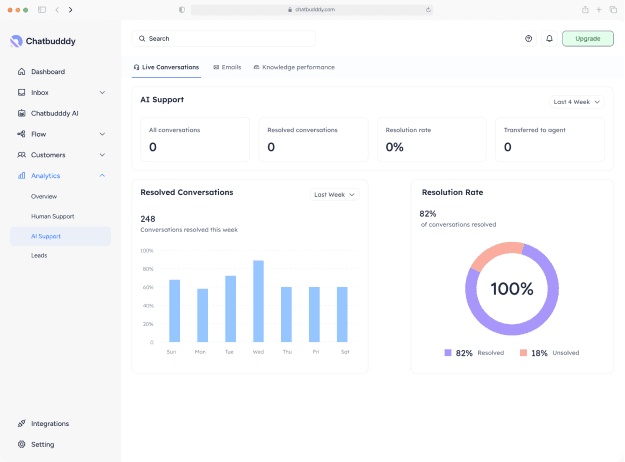
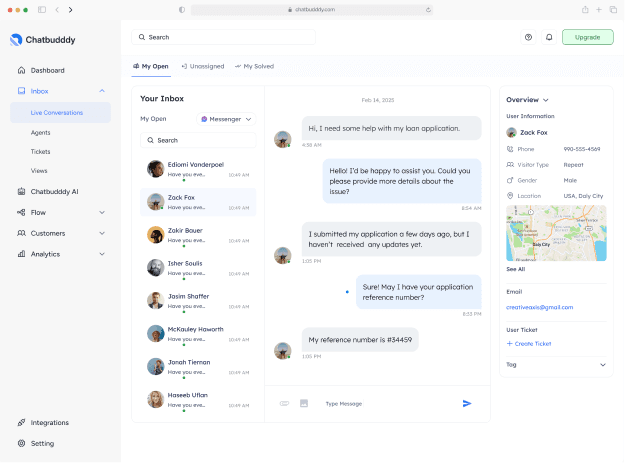
ChatBuddy interface showcasing features for small business communication and customer engagement.
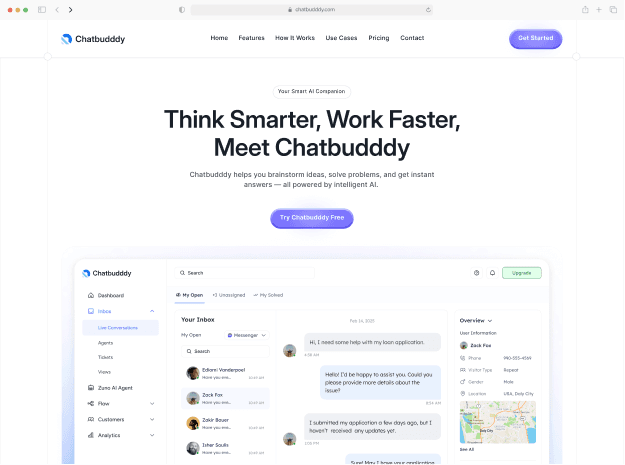
The Mac chat app displays a group of people engaged in conversation.

Visibility

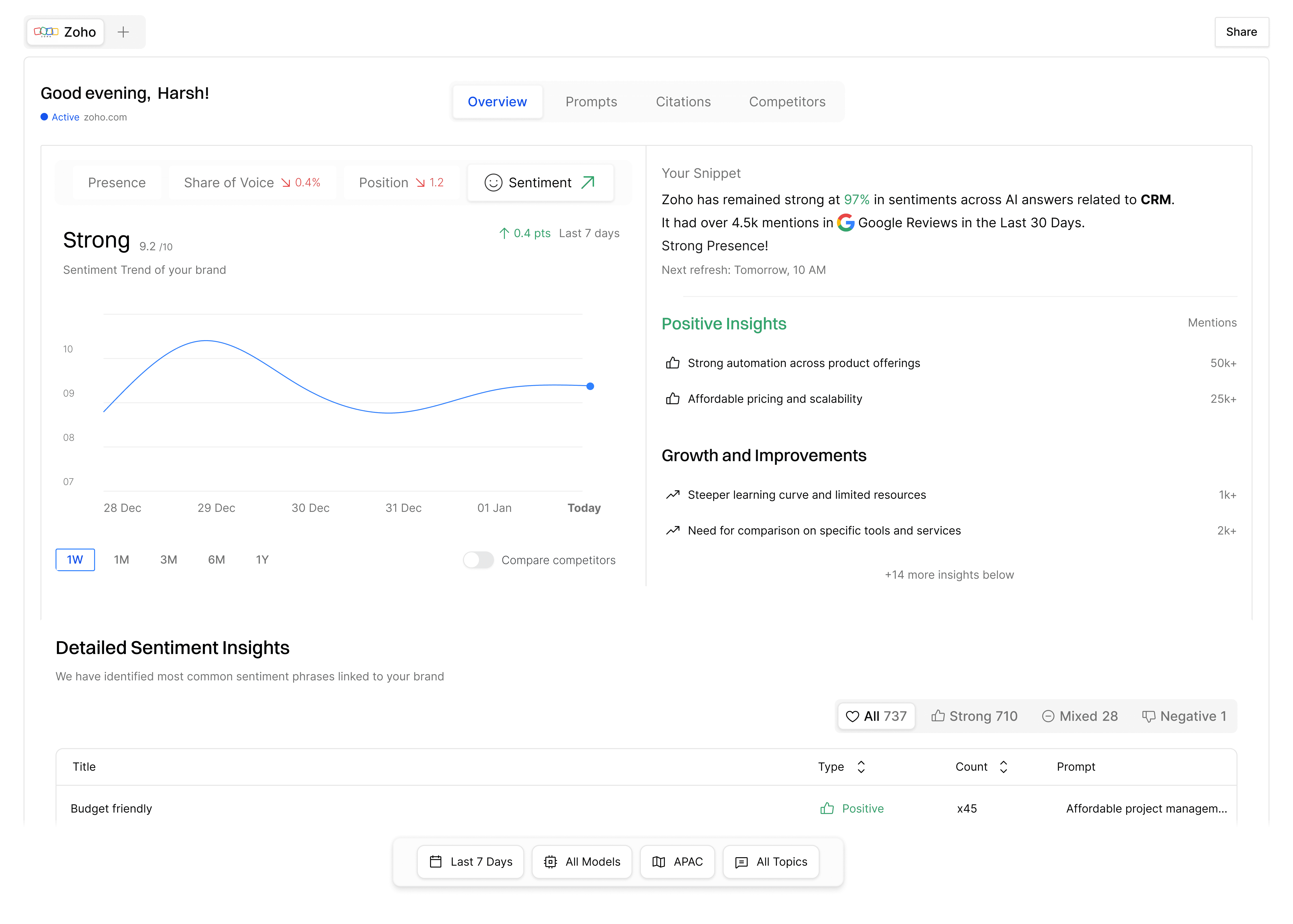
Visibility measures whether the brand appears at all. Visibility includes 

  • Direct citations 

  • Mentions in recommendation lists

  • comparative references

  • Follow-up suggestions 

A company can maintain strong organic rankings and still register near-zero AI visibility; the two metrics are no longer reliably correlated.

Sentiment

Sentiment measures how AI platforms describe the brand when it does appear. Sentiment includes 

  • Positive framing 

  • Neutral acknowledgement

  • Missing differentiation

  • Competitive disadvantages 

  • Negative associations 

All of the above produce very different outcomes for buyer perception. Because AI platforms synthesise answers, the quality of a brand's representation matters as much as its presence.

Position

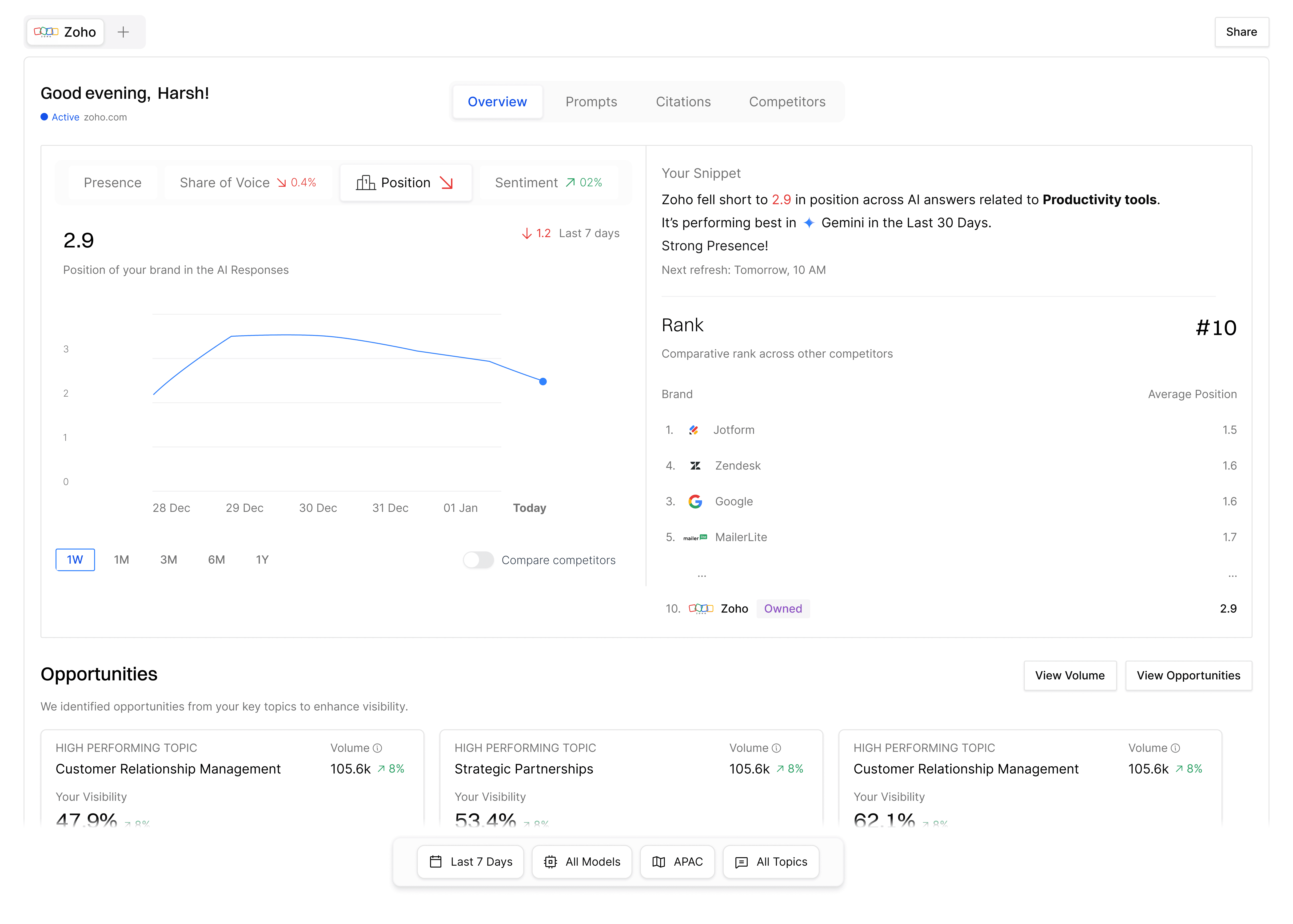
Position measures where, within an AI response, the brand appears. 

  • A brand named first in a recommendation receives more consideration by a potential buyer compared to one mentioned as an afterthought or not at all. 

Together, these three metrics form the core of Gravton's AI visibility measurement framework and reveal what no traditional analytics stack can: the full picture of how AI platforms currently represent the brand to potential buyers.

A plane flying through a blue sky filled with fluffy white clouds.
An extensive dashboard layout displaying numerous repeated sections, featuring graphs, charts, and navigation options.
ChatBuddy interface showcasing features for small business communication and customer engagement.
The Mac chat app displays a group of people engaged in conversation.

Visibility

Visibility measures whether the brand appears at all. Visibility includes 

  • Direct citations 

  • Mentions in recommendation lists

  • comparative references

  • Follow-up suggestions 

A company can maintain strong organic rankings and still register near-zero AI visibility; the two metrics are no longer reliably correlated.

Sentiment

Sentiment measures how AI platforms describe the brand when it does appear. Sentiment includes 

  • Positive framing 

  • Neutral acknowledgement

  • Missing differentiation

  • Competitive disadvantages 

  • Negative associations 

All of the above produce very different outcomes for buyer perception. Because AI platforms synthesise answers, the quality of a brand's representation matters as much as its presence.

Position

Position measures where, within an AI response, the brand appears. 

  • A brand named first in a recommendation receives more consideration by a potential buyer compared to one mentioned as an afterthought or not at all. 

Together, these three metrics form the core of Gravton's AI visibility measurement framework and reveal what no traditional analytics stack can: the full picture of how AI platforms currently represent the brand to potential buyers.

A plane flying through a blue sky filled with fluffy white clouds.
An extensive dashboard layout displaying numerous repeated sections, featuring graphs, charts, and navigation options.
ChatBuddy interface showcasing features for small business communication and customer engagement.
The Mac chat app displays a group of people engaged in conversation.

Visibility

Visibility measures whether the brand appears at all. Visibility includes 

  • Direct citations 

  • Mentions in recommendation lists

  • comparative references

  • Follow-up suggestions 

A company can maintain strong organic rankings and still register near-zero AI visibility; the two metrics are no longer reliably correlated.

Sentiment

Sentiment measures how AI platforms describe the brand when it does appear. Sentiment includes 

  • Positive framing 

  • Neutral acknowledgement

  • Missing differentiation

  • Competitive disadvantages 

  • Negative associations 

All of the above produce very different outcomes for buyer perception. Because AI platforms synthesise answers, the quality of a brand's representation matters as much as its presence.

Position

Position measures where, within an AI response, the brand appears. 

  • A brand named first in a recommendation receives more consideration by a potential buyer compared to one mentioned as an afterthought or not at all. 

Together, these three metrics form the core of Gravton's AI visibility measurement framework and reveal what no traditional analytics stack can: the full picture of how AI platforms currently represent the brand to potential buyers.

Competitive Intelligence

What Competitive Intelligence shows

The Insights Engine functions as a competitive intelligence system.

Our platform continuously analyses 

  • Which competitors dominate which specific prompt clusters 

  • Which structural and topical patterns does their high-performing content follow 

  • which integrations and technical documentation appear to influence citation frequency and 

  • How their positioning narratives differ from the brand's

This competitive layer allows marketing teams to move beyond guessing why a competitor earns stronger AI recommendations. It helps identify the specific structural, narrative, and content-level factors driving that outcome and address them systematically.

Competitive Intelligence

What Competitive Intelligence shows

The Insights Engine functions as a competitive intelligence system.

Our platform continuously analyses 

  • Which competitors dominate which specific prompt clusters 

  • Which structural and topical patterns does their high-performing content follow 

  • which integrations and technical documentation appear to influence citation frequency and 

  • How their positioning narratives differ from the brand's

This competitive layer allows marketing teams to move beyond guessing why a competitor earns stronger AI recommendations. It helps identify the specific structural, narrative, and content-level factors driving that outcome and address them systematically.

Competitive Intelligence

What Competitive Intelligence shows

The Insights Engine functions as a competitive intelligence system.

Our platform continuously analyses 

  • Which competitors dominate which specific prompt clusters 

  • Which structural and topical patterns does their high-performing content follow 

  • which integrations and technical documentation appear to influence citation frequency and 

  • How their positioning narratives differ from the brand's

This competitive layer allows marketing teams to move beyond guessing why a competitor earns stronger AI recommendations. It helps identify the specific structural, narrative, and content-level factors driving that outcome and address them systematically.

Citation Tracking

What Citation Tracking does

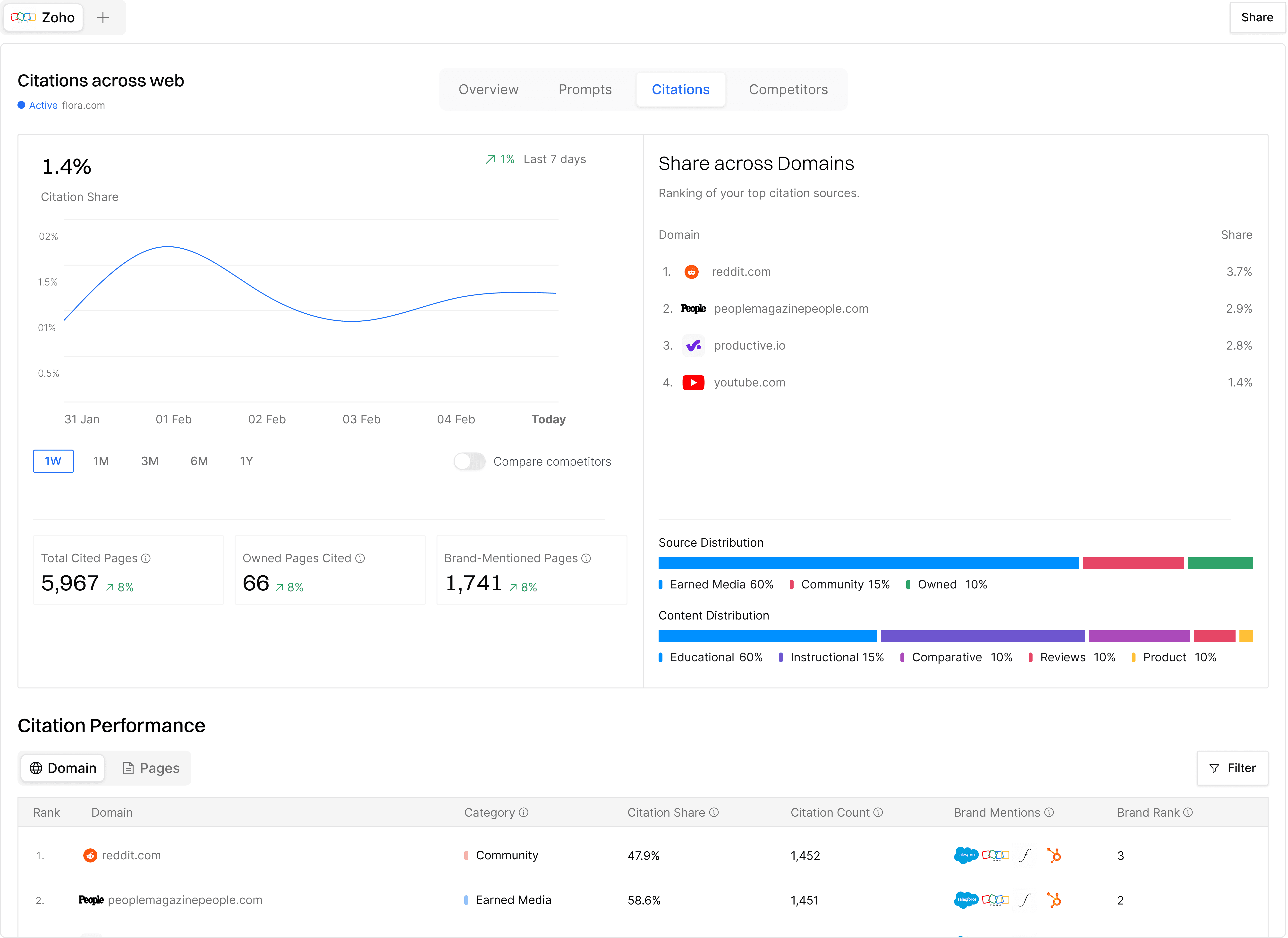
Citation tracking is the most strategically valuable capability within the Insights Engine. Usually, AI platforms synthesise from a distributed information ecosystem. These include product documentation, blogs, review platforms, community discussions, comparison pages, technical repositories, and analyst commentary.

The Insights Engine maps 

  • Which sources do AI platforms reference most frequently 

  • Which citations are actively driving brand recommendations 

  • Which pages within the brand's own properties are being ignored 

Critically, it also surfaces which external sources, 

  • Third-party review sites

  • Forum discussions 

  • Industry publications 

All of the above are influencing the AI platforms' understanding of a brand and its category.

Citation tracking gives marketing and communications teams a much richer picture of their digital footprint's effectiveness. Rather than optimising only owned media in isolation, brands can identify where earned and community signals are either supporting or undermining their AI visibility, and take informed action across all three.

Citation Tracking

What Citation Tracking does

Citation tracking is the most strategically valuable capability within the Insights Engine. Usually, AI platforms synthesise from a distributed information ecosystem. These include product documentation, blogs, review platforms, community discussions, comparison pages, technical repositories, and analyst commentary.

The Insights Engine maps 

  • Which sources do AI platforms reference most frequently 

  • Which citations are actively driving brand recommendations 

  • Which pages within the brand's own properties are being ignored 

Critically, it also surfaces which external sources, 

  • Third-party review sites

  • Forum discussions 

  • Industry publications 

All of the above are influencing the AI platforms' understanding of a brand and its category.

Citation tracking gives marketing and communications teams a much richer picture of their digital footprint's effectiveness. Rather than optimising only owned media in isolation, brands can identify where earned and community signals are either supporting or undermining their AI visibility, and take informed action across all three.

Citation Tracking

What Citation Tracking does

Citation tracking is the most strategically valuable capability within the Insights Engine. Usually, AI platforms synthesise from a distributed information ecosystem. These include product documentation, blogs, review platforms, community discussions, comparison pages, technical repositories, and analyst commentary.

The Insights Engine maps 

  • Which sources do AI platforms reference most frequently 

  • Which citations are actively driving brand recommendations 

  • Which pages within the brand's own properties are being ignored 

Critically, it also surfaces which external sources, 

  • Third-party review sites

  • Forum discussions 

  • Industry publications 

All of the above are influencing the AI platforms' understanding of a brand and its category.

Citation tracking gives marketing and communications teams a much richer picture of their digital footprint's effectiveness. Rather than optimising only owned media in isolation, brands can identify where earned and community signals are either supporting or undermining their AI visibility, and take informed action across all three.

Opportunity

What Opportunity Prioritisation is

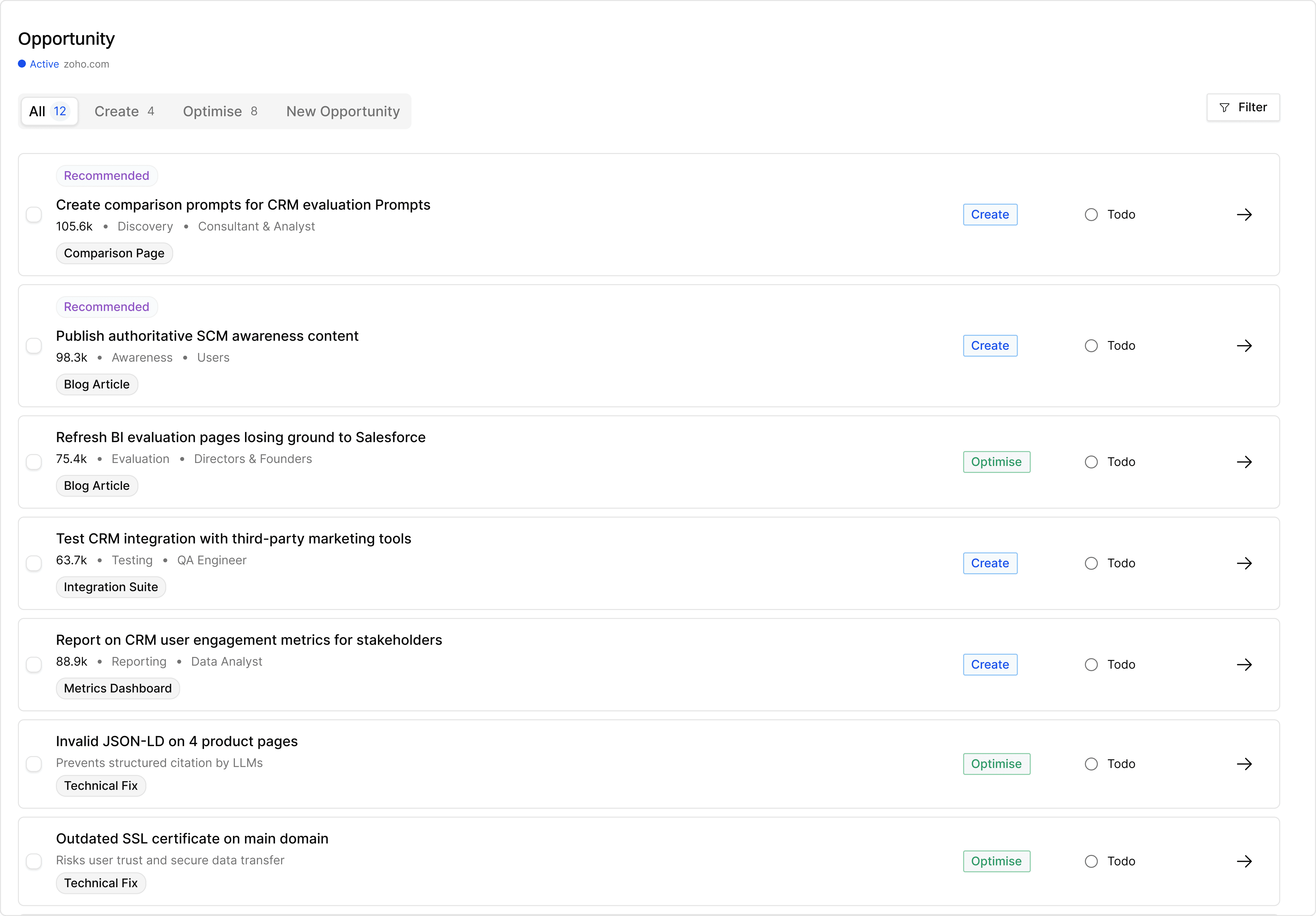
A common failure mode in analytics is surfacing enormous volumes of data without a clear direction for action. The Insights Engine is designed to avoid this by prioritising opportunities according to their business impact.

Our platform directly surfaces the opportunities most likely to influence pipeline and revenue: 

  • High-volume prompt clusters where the brand is underrepresented

  • Competitive losses in evaluation-stage conversations

  • Emerging prompt categories that are gaining traction 

  • Content gaps in high-conversion conversational patterns

These allow marketing teams to concentrate resources where improvement will generate measurable commercial outcomes, rather than dispersing effort across lower-priority optimisations.

Opportunity

What Opportunity Prioritisation is

A common failure mode in analytics is surfacing enormous volumes of data without a clear direction for action. The Insights Engine is designed to avoid this by prioritising opportunities according to their business impact.

Our platform directly surfaces the opportunities most likely to influence pipeline and revenue: 

  • High-volume prompt clusters where the brand is underrepresented

  • Competitive losses in evaluation-stage conversations

  • Emerging prompt categories that are gaining traction 

  • Content gaps in high-conversion conversational patterns

These allow marketing teams to concentrate resources where improvement will generate measurable commercial outcomes, rather than dispersing effort across lower-priority optimisations.

Opportunity

What Opportunity Prioritisation is

A common failure mode in analytics is surfacing enormous volumes of data without a clear direction for action. The Insights Engine is designed to avoid this by prioritising opportunities according to their business impact.

Our platform directly surfaces the opportunities most likely to influence pipeline and revenue: 

  • High-volume prompt clusters where the brand is underrepresented

  • Competitive losses in evaluation-stage conversations

  • Emerging prompt categories that are gaining traction 

  • Content gaps in high-conversion conversational patterns

These allow marketing teams to concentrate resources where improvement will generate measurable commercial outcomes, rather than dispersing effort across lower-priority optimisations.

Revenue Impact

AI Visibility as a revenue-critical metric

Gravton's foundational premise is that AI visibility is becoming a revenue-critical metric for B2B companies. This AI visibility will eventually sit alongside organic traffic, conversion rate, and pipeline contribution as a core measure of marketing effectiveness.

The logic is straightforward. As AI platforms increasingly mediate

  • software discovery 

  • product comparisons

  • vendor shortlisting

  • purchase recommendations 

Brands risk losing demand before buyers ever reach their websites or sales teams. 

Our Insights Engine provides organisations with an early warning system for this shift. Rather than discovering a problem through declining pipeline or traffic drops, teams can detect AI visibility decline while there is still time to intervene and correct it.

Revenue Impact

AI Visibility as a revenue-critical metric

Gravton's foundational premise is that AI visibility is becoming a revenue-critical metric for B2B companies. This AI visibility will eventually sit alongside organic traffic, conversion rate, and pipeline contribution as a core measure of marketing effectiveness.

The logic is straightforward. As AI platforms increasingly mediate

  • software discovery 

  • product comparisons

  • vendor shortlisting

  • purchase recommendations 

Brands risk losing demand before buyers ever reach their websites or sales teams. 

Our Insights Engine provides organisations with an early warning system for this shift. Rather than discovering a problem through declining pipeline or traffic drops, teams can detect AI visibility decline while there is still time to intervene and correct it.

Revenue Impact

AI Visibility as a revenue-critical metric

Gravton's foundational premise is that AI visibility is becoming a revenue-critical metric for B2B companies. This AI visibility will eventually sit alongside organic traffic, conversion rate, and pipeline contribution as a core measure of marketing effectiveness.

The logic is straightforward. As AI platforms increasingly mediate

  • software discovery 

  • product comparisons

  • vendor shortlisting

  • purchase recommendations 

Brands risk losing demand before buyers ever reach their websites or sales teams. 

Our Insights Engine provides organisations with an early warning system for this shift. Rather than discovering a problem through declining pipeline or traffic drops, teams can detect AI visibility decline while there is still time to intervene and correct it.

Final thoughts

The Insights Engine is not a standalone analytics module. It is the intelligence foundation on which the rest of the Gravton platform operates.

Every downstream workflow in Gravton begins with the insight engine. The quality of the intelligence determines the quality of every action that follows.

Your Brand Visibility

Your Brand Visibility

Last 1 Month

Last 1 Month

87%

87%

Sentiment

Sentiment

Positive

Positive

Position

3

3

Insights feeds Opportunity

Insights Engine outputs feed the Opportunity Engine, which converts visibility data into prioritised content and optimisation actions.


Outreach

Outreach

Connect with Aaron Wells

Connect with Aaron Wells

Progres

Progres

21 Day

21 Day

Comparative pages

Comparative pages

Build comparative pages for your brand

Build comparative pages for your brand

Profile image 05

Raymond Baratheon

Raymond Baratheon

Sales Marketing Manager

Sales Marketing Manager

Opportunity connects Content

Opportunity Engine connects to Content Studio, which translates those opportunities into brand-native, AI-optimised content.

Gogole Analytics

Gogole Analytics

Connect

Connect

Beta Pixel

Beta Pixel

Connect

Connect

InkedIn Conversion API

InkedIn Conversion

Connect

Connect

Mailghimp campaigns

Mailghimp campaigns

Connect

Connect

YouDube Analytics

YouDube Analytics

Connect

Connect

Opportunity underpins Control Tower

Opportunity Engine underpins the Control Tower, which governs visibility management as a continuous operational discipline.

Measure results, learn from insights, and keep improving your sales process with cycle.

Win Your AI Search Demand Universe

Companies working with Gravton see 15-40% visibility lift within 120 days.

Every demo includes a free audit, dashboard access, and a working session on your priority gaps

Win Your AI Search Demand Universe

Companies working with Gravton see 15-40% visibility lift within 120 days.

Every demo includes a free audit, dashboard access, and a working session on your priority gaps

EMPOWER YOUR TEAM

Make your brand stand on the first aisle

Space and Orbits

CONTACT US

Want to get started?